

One of the most challenging steps in process development is moving from laboratory success to dependable, industrial-scale operation. What appears to be efficient and controlled in a bench-scale experiment can often behave differently under real-world production demands. Heat transfer may no longer balance, mixing patterns may shift, and materials may interact in ways that were invisible at a smaller scale, problems that often only become apparent after full-scale investment, leading to delays, redesigns, or even outright failure. Pilot-scale physical process modeling helps anticipate and address these issues in advance, ensuring potential risks are identified, design or procedural adjustments are tested, and full-scale operations can be launched with greater confidence and reliability.
What Is Pilot-Scale Physical Process Modeling?
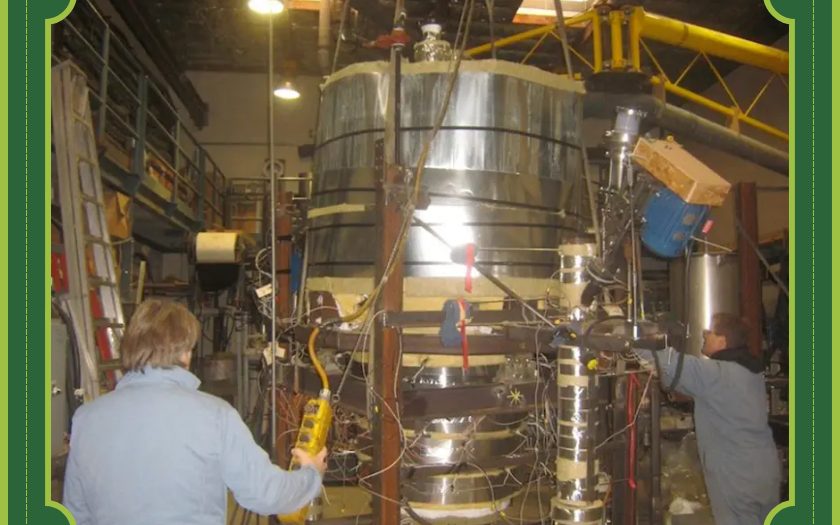
Pilot-scale physical process modeling refers to building and operating a scaled version of a process, or of its critical equipment, that is larger than a laboratory setup but smaller than a full production plant. Unlike digital simulations, the pilot-scale models place real materials under conditions that closely resemble those expected at the industrial scale. In many bulk solids applications, detailed material property testing complements pilot modeling by providing the engineering required to design equipment reliably at any scale.
Sectors like chemicals, biopharmaceuticals, energy, mining, and food production, utilize pilot-scale physical process modeling to study heat and mass transfer, fluid dynamics, separation performance, and material handling. In addition to these applications, pilot-scale physical process modeling is especially valuable for bulk solids, which often behave unpredictably compared to liquids or gases. By bridging the gap between laboratory studies and commercial operations, pilot-scale physical process modeling ensures organizations have the support required to scale up more effectively and reduce project risk.
Situations That Require Pilot-Scale Physical Process Modeling
When Scale-Dependent Effects Become Critical
As processes move from the laboratory to larger scales, different flow behaviors may occur with bulk solids. Powder flowability testing provides data for small scale and large scale systems. Without test data, it mistakenly may be assumed that material will flow well on a small scale. But in reality problems may arise at a larger scale due to over-consolidation of the powder, resulting in poor flow situations. Pilot-scale physical process modeling helps identify these behaviors before moving ahead to full-scale design and construction. It is particularly valuable for first-of-its-kind or highly customized applications where no prior operating history exists. When a process configuration or material combination has never been implemented before, pilot testing provides proof of concept under realistic conditions before capital investment is made.
When Operational and Control Strategies Need Testing
Start-up and shutdown procedures, upset recovery, and control strategies often behave very differently outside the laboratory. Operators can test and refine procedures in a safe setting with the application of pilot-scale physical process modeling. The insights gained during the pilot-modeling stage reduce commissioning risks, minimize downtime, and strengthen reliability in full-scale operations.
When Models and Simulations Require Validation
Process simulators and computational fluid dynamics can reveal important phenomena such as fluid flow, heat transfer, and mixing, but their accuracy depends on the assumptions made about how these processes behave at scale. Empirical data from pilot-scale physical process modeling provides the proof needed to confirm or adjust the assumptions, allowing simulation models to be calibrated and validated before they are relied upon for scale-up decisions. Within bulk solids systems, validated material property data plays a similar role through grounding scale-up decisions in measured behavior rather than assumption.
When Regulators Demand Real-World Evidence
Regulators require performance data that goes beyond laboratory results, making pilot-scale physical process modeling a critical step in many approval processes. In water treatment, for example, pilot studies are often necessary to demonstrate compliance with environmental standards. Moreover, in pharmaceuticals, the outcomes of pilot-scale physical process modeling are used to justify the design space applied in manufacturing. By supplying data under near-commercial conditions, pilot-scale physical process modeling delivers the level of evidence regulators depend on when granting approvals.
Situations Where Pilot-Scale Physical Process Modeling May Not Be Required
When Processes Are Established and Well Understood
If a process has been scaled up before and the technology is considered low risk, it is often possible to move straight to commercial scale. Often in bulk solids projects, comprehensive material characterization alone provides sufficient data to design reliable systems at commercial scale. If flow properties are well defined, proven design methods can be applied without intermediate pilot testing.
When Computational or Field Data Provide Strong Evidence
High-quality simulations and extensive operating data can sometimes replace a pilot. Once models have been tested against real-world results, an additional pilot run may yield very little new insight. In these cases, strong computational and field evidence offers enough assurance to move directly to full-scale deployment as the most practical course of action.
Establishing Successful Scale-up With Pilot-Scale Physical Process Modeling
The decision to invest in pilot-scale physical process modeling can ultimately determine the success or failure of a scale-up. For those who want to utilize it, we, Jenike & Johanson can work alongside your team to identify risks, validate designs, and provide solutions that ensure reliable performance at commercial scale. Our pilot-scale physical process modeling services, combined with detailed material property testing, provide the data needed to design and validate systems from small development units through to full industrial scale, giving organizations the confidence to move forward without any costly setbacks. Contact us today and learn how our pilot-scale physical process modeling services can help you scale processes with greater reliability and reduced risk.