


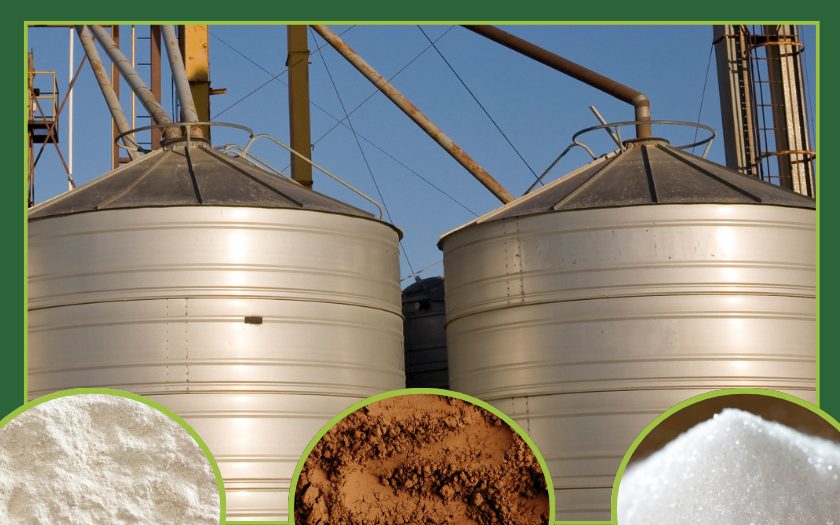
A storage silo may appear clean from the outside while concealed material buildup inside the hopper quietly compromises product quality. In many conventional vessels, including funnel flow silos, steep-walled storage bins, and poorly designed hoppers, powders linger in stagnant regions where consolidation, moisture migration, and microbial activity gradually develop over time. Once these deposits accumulate, they can break loose and contaminate downstream processing operations during discharge. Mass flow design prevents material stagnation, moisture accumulation, and deposit formation by maintaining consistent material movement, supporting hygienic bulk food storage and more reliable food processing operations.
How Mass Flow Eliminates Stagnant Zones to Prevent Food Spoilage
Traditional funnel flow silos discharge material through a narrow channel above the outlet as large quantities of product remain stationary near the vessel walls. Such stagnant regions generate ideal conditions for degradation because powders can remain trapped for extended periods without movement.
Mass flow design eliminates dead zones through continuous material movement whenever discharge occurs. Instead of forming inactive pockets of retained material along the hopper walls, the entire contents of the vessel flow uniformly toward the outlet. Uniform material flow improves hygienic storage conditions and reduces the accumulation of aged material inside the vessel.
Food powders are especially vulnerable to time-dependent consolidation over extended storage periods. Ingredients such as flour, sugar, cocoa, starches, and dairy powders gradually compact under their own weight. When consolidation pressure increases, the material develops cohesive strength and becomes increasingly resistant to flow. Under extended storage conditions, the powder may:
- Cake and harden
- Form stable obstructions
- Lose consistent flowability
- Develop localized spoilage risks.
Steady material flow within a mass flow hopper minimizes consolidation and caking because the material does not remain stationary long enough to gain excessive cohesive strength.
Stagnant material zones also generate favorable environments for microbial activity. Moisture and heat can accumulate in isolated regions inside the storage silo, allowing mold, bacteria, and insects to thrive within trapped pockets of material. Mass flow design can maintain uniform hopper flow, limiting microbial growth, moisture accumulation, and material degradation.
How Mass Flow Enforces FIFO Flow Patterns for Hygienic Integrity
Residence time control plays a critical role in preserving food quality during bulk storage. Ingredients stored beyond their intended shelf-life may experience oxidation, flavor deterioration, moisture absorption, or nutrient degradation before they even reach production.
Mass flow design naturally produces a first-in, first-out (FIFO) flow pattern. Material introduced into the silo first exits the vessel first since all stored product moves together when the silo discharges. This predictable movement allows processors to maintain tighter control over lots, inventory turnover, and storage duration.
Funnel flow silos behave very differently. Newly loaded material tends to move rapidly through the central flow channel while older material remains trapped near the hopper walls. In practice, this forms a first-in, last-out (FILO) condition where aged material may remain inside the silo indefinitely.
For hygroscopic or fat-containing ingredients, prolonged residence time generates substantial quality risks. Material degradation may include:
- Moisture absorption
- Agglomeration
- Oxidation
- Flavor deterioration.
Another concern involves sloughing from stagnant wall regions. Material that adheres to the hopper surface can eventually detach and collapse into the active flow stream. These deposits may contain degraded product, compacted lumps, or microbial contamination that compromise downstream quality and batch consistency.
Mass flow design minimizes the risk of material buildup and contamination through continuously moving material along the vessel walls as the hopper empties. Product does not remain stationary long enough to form persistent material deposits, and so the hopper surface remains substantially cleaner throughout operation.
The Structural Mechanics of Mass Flow That Maintain Vessel Hygiene
Reliable mass flow performance depends on precise engineering rather than standard silo geometry alone. Hopper angles, outlet dimensions, wall friction characteristics, and material flow properties must work as one to produce uniform discharge behavior.
During discharge, the sliding motion of the bulk solid against the hopper walls produces a natural scouring effect that continuously removes residual material. This wall-cleaning mechanism helps prevent the accumulation of cohesive deposits that commonly develop in poorly flowing storage systems.
Without proper flow behavior, residual powders may gradually harden into stable ratholes or wall deposits. These isolated regions can:
- Retain old material for extended periods
- Contaminate fresh product streams
- Complicate cleaning procedures
- Increase sanitation challenges.
Mass flow also helps control particle segregation throughout discharge. Many food blends separate in the filling process due to fine and coarse particles settling differently according to size and density. Funnel flow intensifies this separation by drawing material primarily through the center of the vessel, permitting segregated regions to persist near the walls.
Uniform flow movement within a mass flow hopper promotes more consistent remixing when discharge occurs, helping processors maintain ingredient homogeneity and stabler product quality at every stage of the process.
Achieving Mass Flow with Jenike & Johanson
At Jenike & Johanson, we help food processors implement hygienic bulk storage through verified mass flow design tailored to the characteristics of their materials and operating conditions. Our engineers perform bulk solids flow properties testing and develop functional silo designs, retrofit solutions, and flow correction strategies that prevent stagnation, caking, segregation, and spoilage. Contact Jenike & Johanson to evaluate your current storage systems and improve process reliability across your bulk food handling operation.